
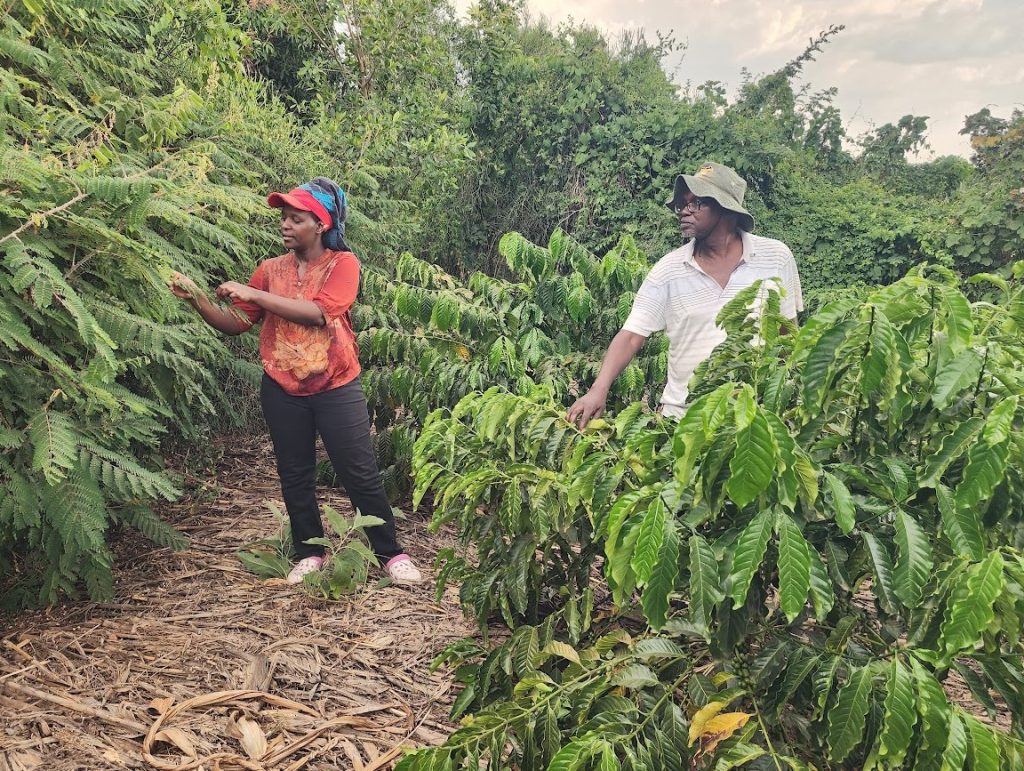
As a prolonged dry spell continues to scorch farmlands across much of Uganda, smallholder farmers are facing severe crop losses. In Kyankwanzi District, where intense sunshine and delayed rains have left fields parched, AIBIS supported small-holder coffee farmers are demonstrating that simple, sustainable land management practices can mean a big difference between total ruin and a satisfactory harvest.
Over the past week, AIBIS staff members Allan Kalangi and Peruth Atukwatse have been visiting beneficiary farmers to assess how they are coping with the prolonged drought. On Saturday, 5 September, they visited the farm of Mr. Dennis Tabaro, an AIBIS member based in in Kiryamassasa village who integrates coffee farming with food crops such as bananas, beans, maize, and vegetables.
While many open fields in the region show heavy signs of heat stress, Tabaro’s coffee plantation remains largely green and resilient, thanks to the agroecological techniques he adopted through AIBIS training programmes.
Tabaro’s survival strategy relies on three core practices:
- Heavy Mulching: Covering the soil with organic matter has locked in precious ground moisture and shielded fragile root systems from direct solar heat.
- Agroforestry and Shade Management: Rather than clearing his acreage bare, Tabaro preserved mature fruit trees within his coffee rows and planted boundary hedges. The natural canopy provides essential shade, keeping his young coffee plants remarkably healthy and green.
- Targeted Spot Irrigation: By applying small, measured amounts of water directly to individual plants that need it most, he maximises water efficiency during scarce periods.
For smallholder farmers who rely on coffee alongside staple food crops like beans and maize to sustain their households, unpredictable weather patterns pose a growing threat to livelihoods. Tabaro’s success offers a clear model for the wider farming community: integrating trees, protecting the soil, and managing water prudently can shield vital cash and food crops even in the peak of a drought.